Other Minds is a place for writing and video about psychology, relationships, emotion, and change.
It is built on a simple idea: the more clearly we understand our own inner worlds—and the inner worlds of the people around us—the more room we have for connection, choice, and growth.
Start Here
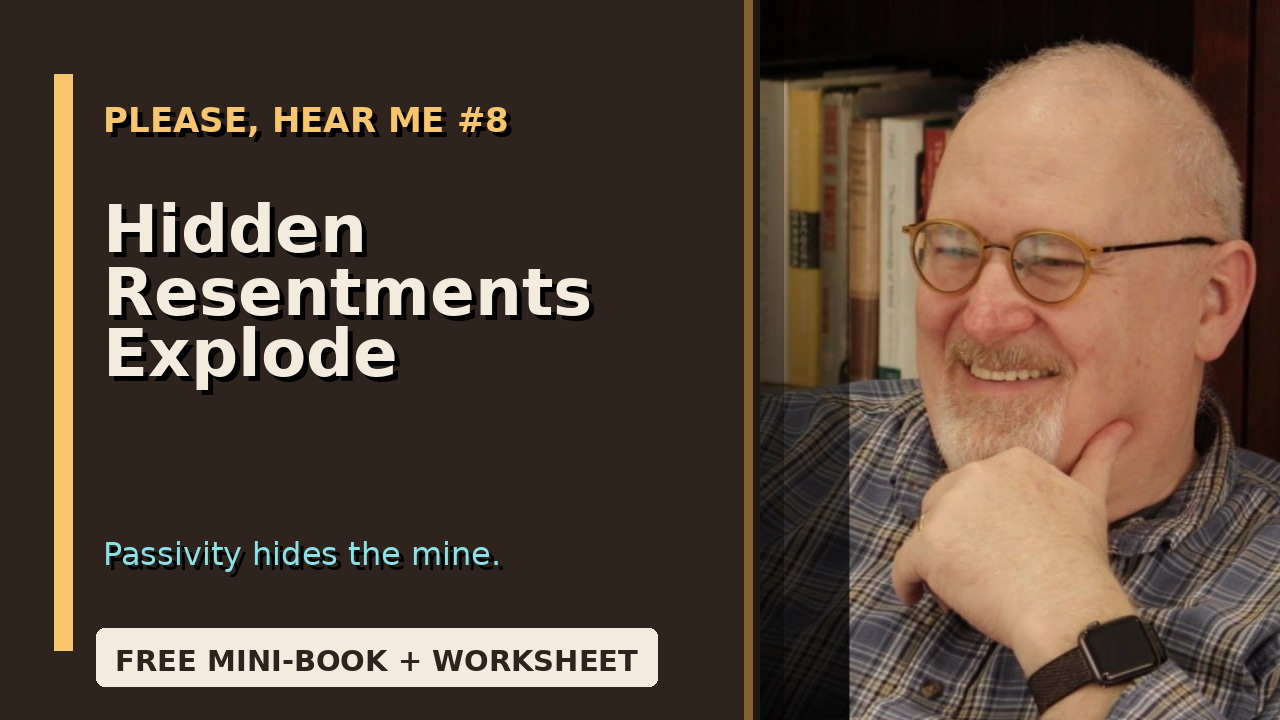
Newest released · Episode 8
The Minefield Metaphor: Why Hidden Resentments Explode
Some relationships feel calm because hard things are handled well. Others feel calm because hard things are hidden. This episode looks at how unspoken concerns become pressure points—and why awareness helps couples move through conflict more carefully.
Watch on YouTubeWriting
A clean, growing list of articles, essays, and future longer pieces.
Videos
Please Hear Me · Season One
The library below follows the public release sequence. Episodes 1–8 are released; direct YouTube links will be activated when the channel URLs are available in the project record.
-
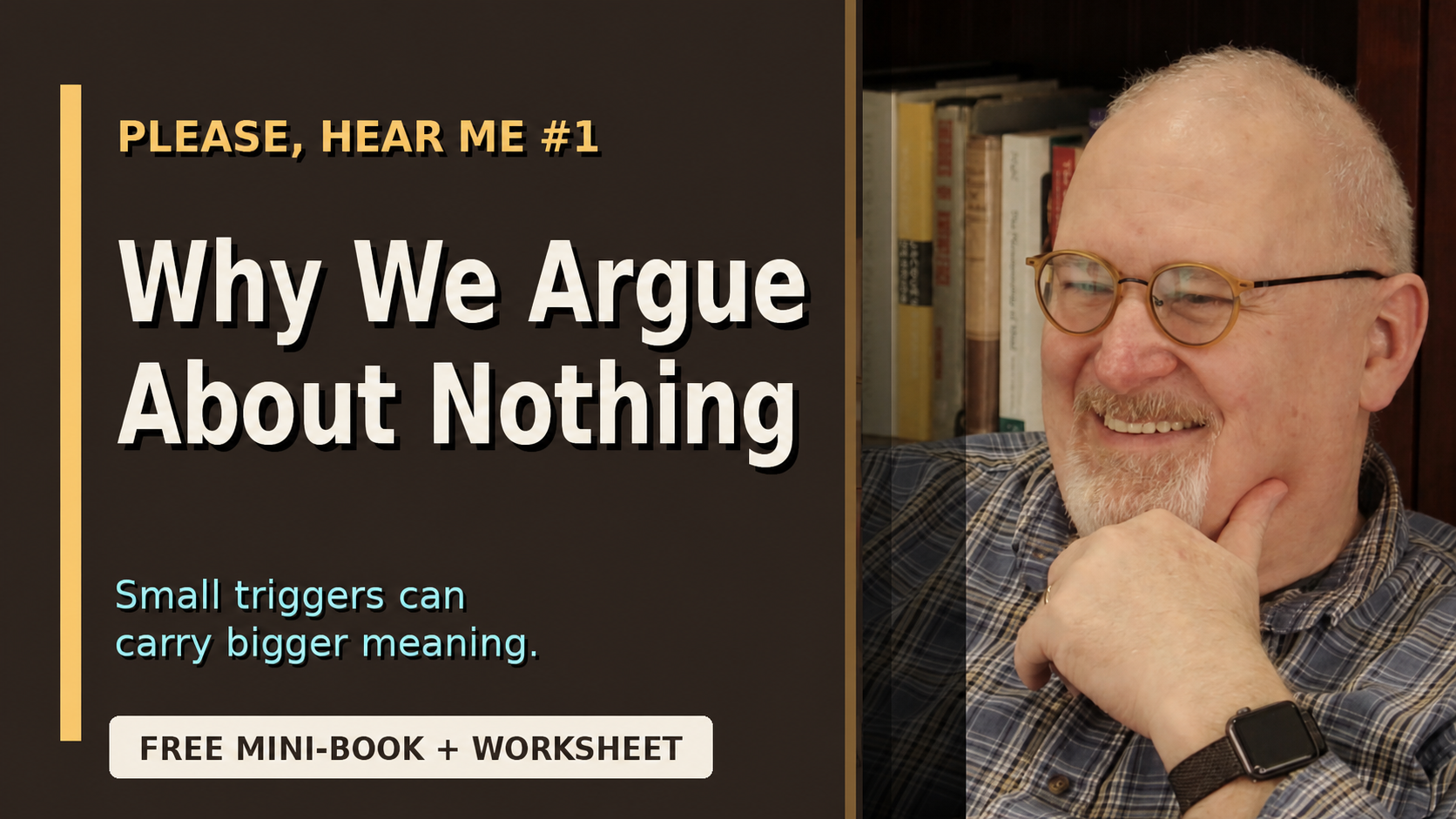
Episode 1
Why We Argue About Nothing
Small triggers can carry much larger meanings about love, respect, safety, reliability, and belonging. The opening episode asks couples to listen for the meaning beneath the argument.
Watch on YouTube -
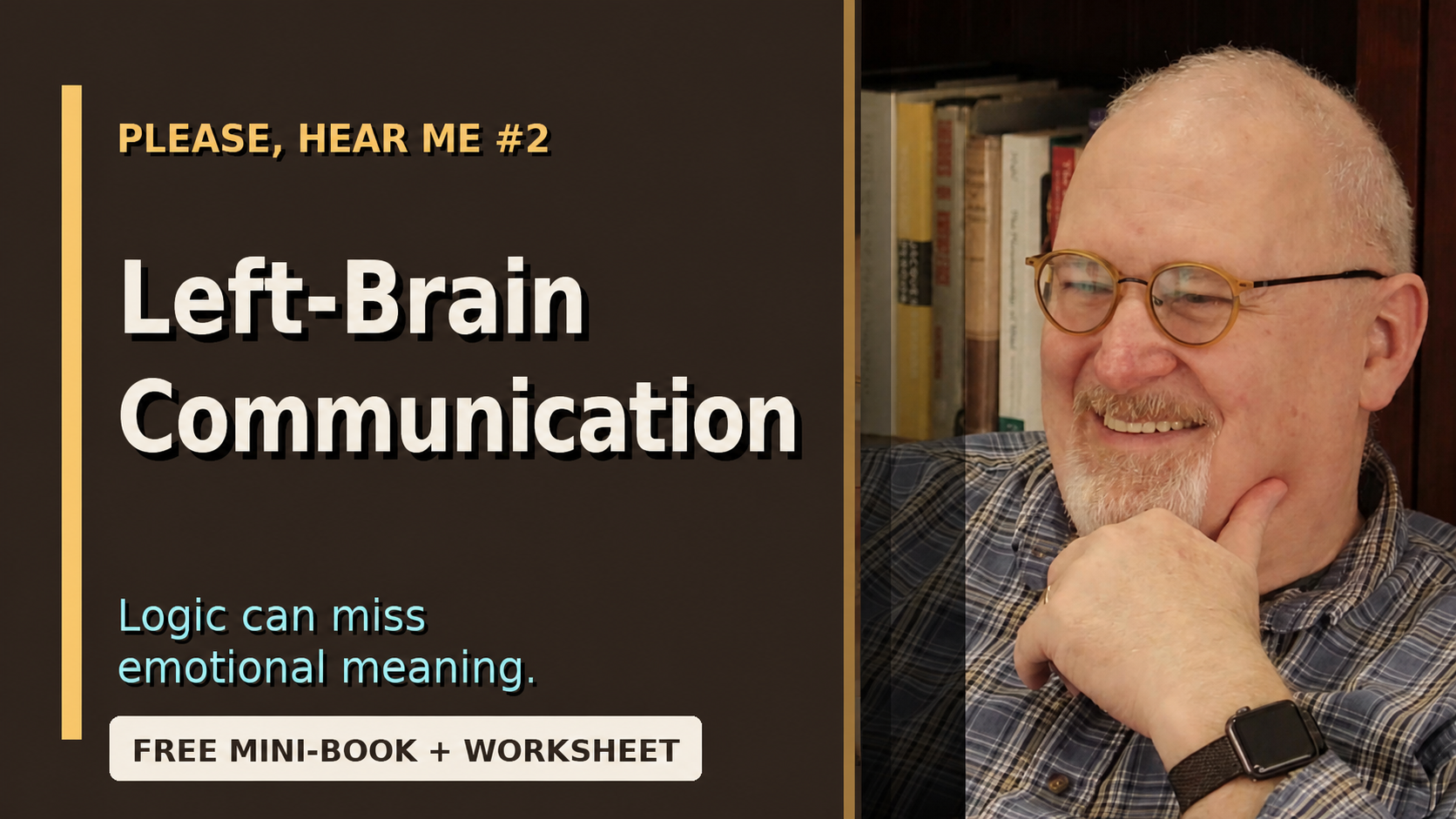
Episode 2
Left-Brain Communication
A practical metaphor for the analytical mode of mind: useful for structure and problem-solving, but prone to treating emotional complexity as if it were an equation with one correct answer.
Watch on YouTube -
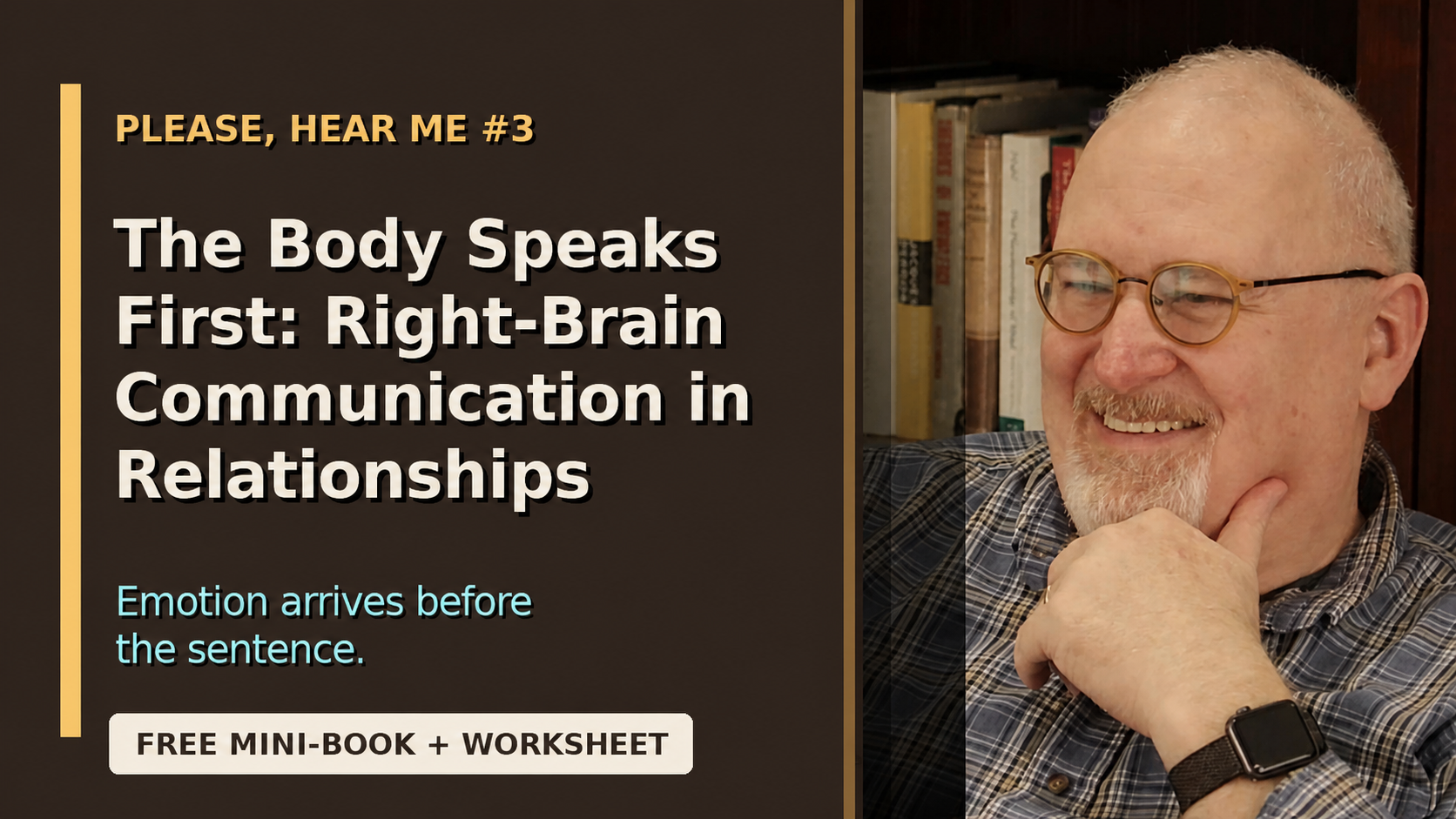
Episode 3
The Body Speaks First: Right-Brain Communication in Relationships
Tone, pacing, posture, timing, and emotional presence shape what a partner hears before the words fully land. This episode explores the relational layer beneath the sentence.
Watch on YouTube -
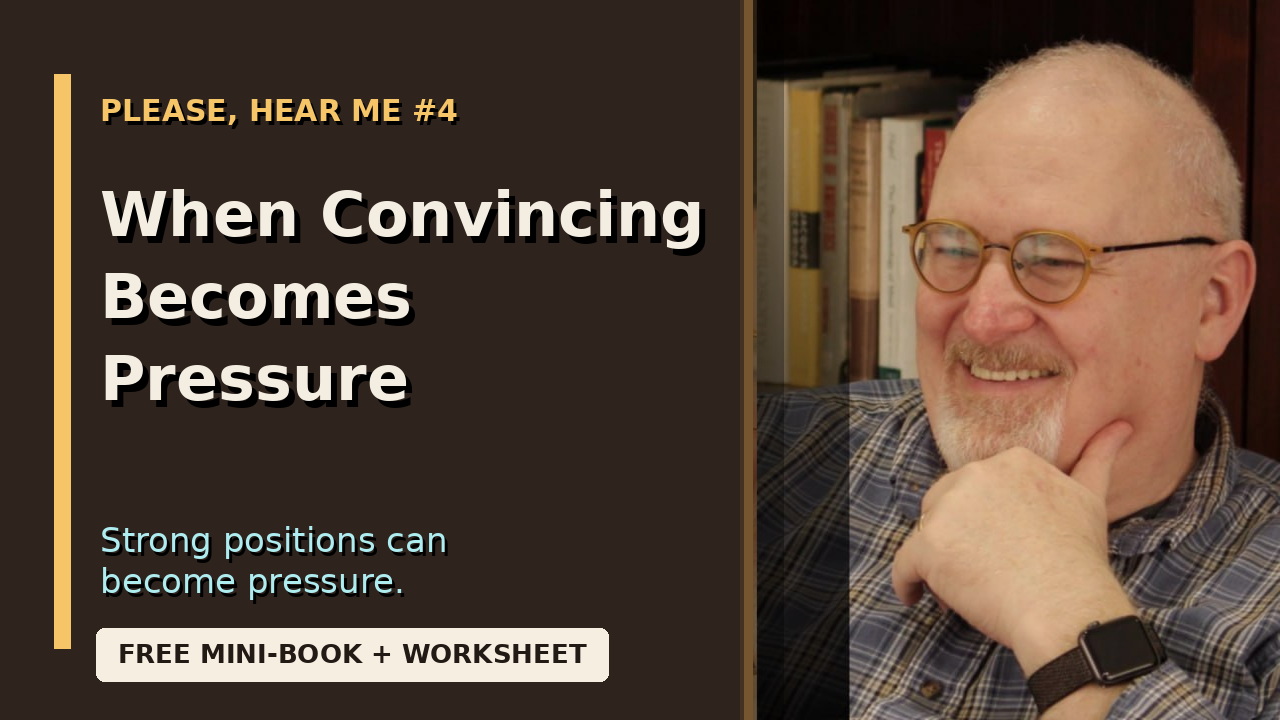
Episode 4
When Convincing Becomes Pressure: Aggressive Communication in Relationships
Aggressive communication is not always loud. It can appear calm or helpful while still asking one person’s position to disappear.
Watch on YouTube -
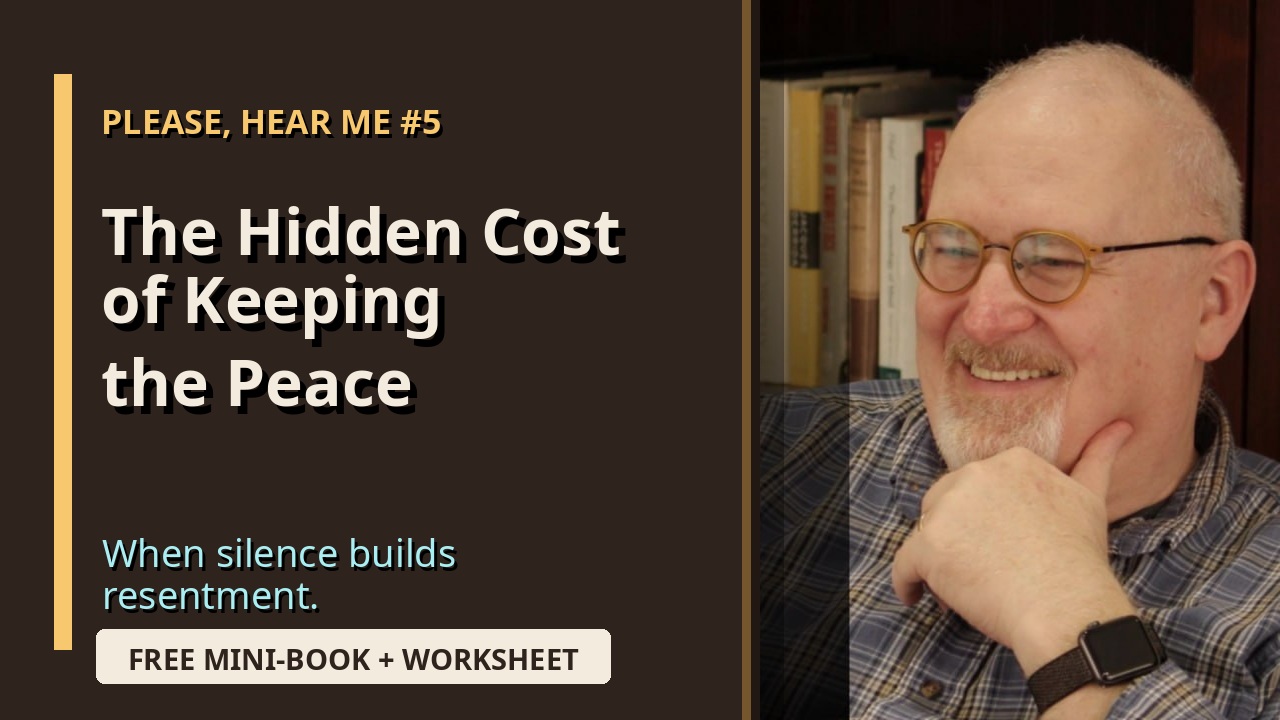
Episode 5
Passive Communication: The Hidden Cost of Keeping the Peace
When thoughts and needs stay hidden to avoid conflict, the problem can go underground. Silence may look like agreement while resentment quietly accumulates.
Watch on YouTube -
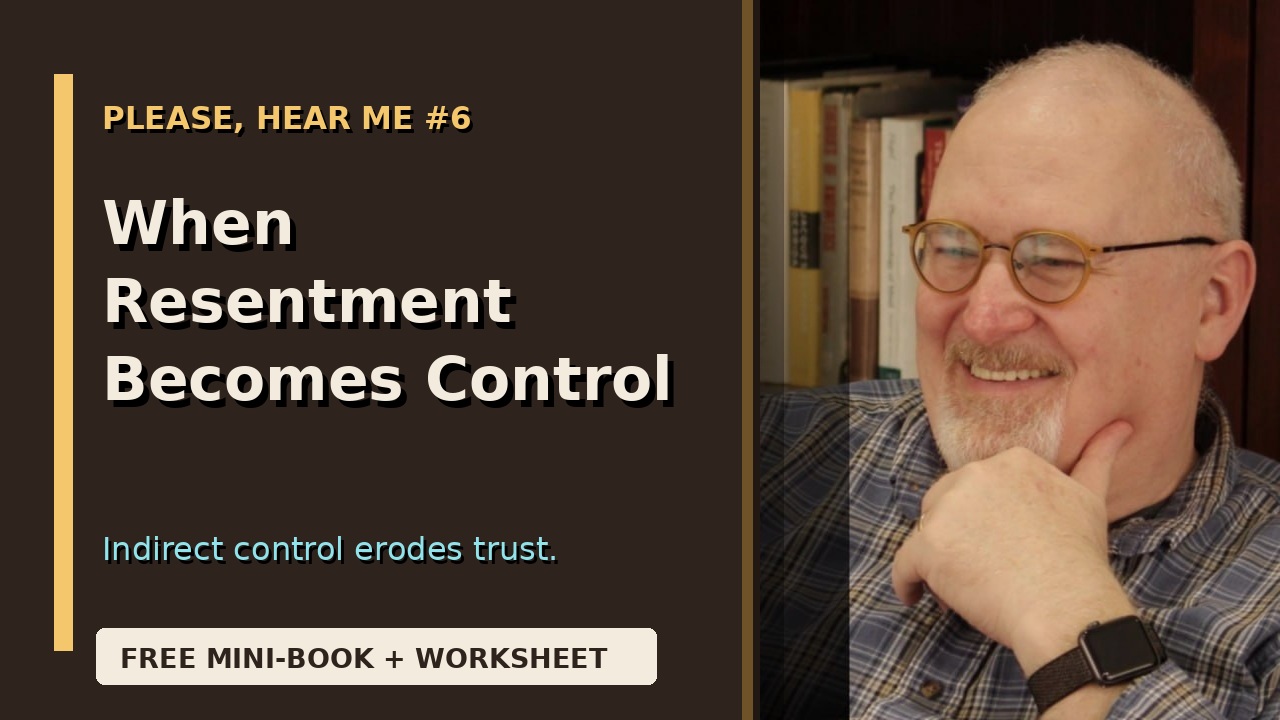
Episode 6
Passive-Aggressive Communication: When Resentment Becomes Control
Hidden resentment can emerge through withdrawal, sarcasm, confusion, or subtle manipulation, leaving the other person guessing about a problem that has not been named.
Watch on YouTube -

Episode 7
Assertive Communication: Direct, Kind, and Clear
Assertiveness means being direct without demanding, honest without being harsh, and respectful without disappearing. The goal is understanding, not winning.
Watch on YouTube -
Episode 8
The Minefield Metaphor: Why Hidden Resentments Explode
Unspoken concerns do not disappear. The minefield metaphor shows why awareness, preparation, and clear communication make difficult moments less explosive.
Watch on YouTube
More to Come
Other Minds will continue to grow through new work, conversations, resources, and occasional contributions from other voices.
Continue Exploring
Related work will be linked here through a small, manually curated set of connections rather than a broad resource directory.
Other Minds is public educational work. It is not psychotherapy, diagnosis, individualized advice, or a substitute for care.